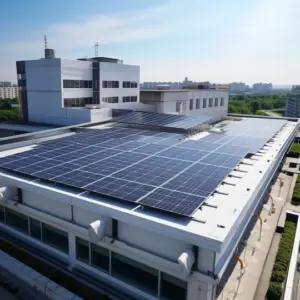
Everything you need to know about solar for Industries

The Importance of Solar for Industries

Electricity is one of the largest operational expenses for industries today. With rising power tariffs, increasing demand, and unpredictable energy costs, businesses are constantly under pressure to control their expenses and improve efficiency. This is where solar for industries is becoming a game-changing solution.
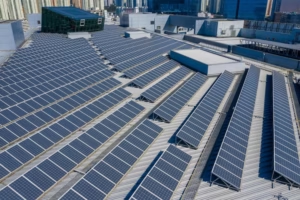
solar system installed for industries

For many industries, electricity costs directly impact profit margins. Whether it’s manufacturing units, warehouses, or processing plants, high energy consumption has become a major challenge in maintaining long-term financial stability.

By generating their own power, businesses can significantly reduce their dependence on grid electricity, lower operational costs, and gain greater control over their energy usage.

Why Do Industries Go for Solar?

Industries are increasingly shifting towards solar energy as a strategic solution to manage rising operational costs and improve long-term efficiency. One of the primary reasons is the continuous increase in electricity tariffs, which directly affects business profitability.

By adopting solar for industries, companies can generate their own electricity, reduce dependence on the grid, and achieve better control over energy costs. This shift not only improves financial stability but also strengthens long-term business sustainability.

Key Benefits of Solar for Industries

Adopting solar energy offers multiple financial and operational advantages for industries. From reducing electricity costs to improving long-term sustainability, solar power has become a valuable investment for businesses.
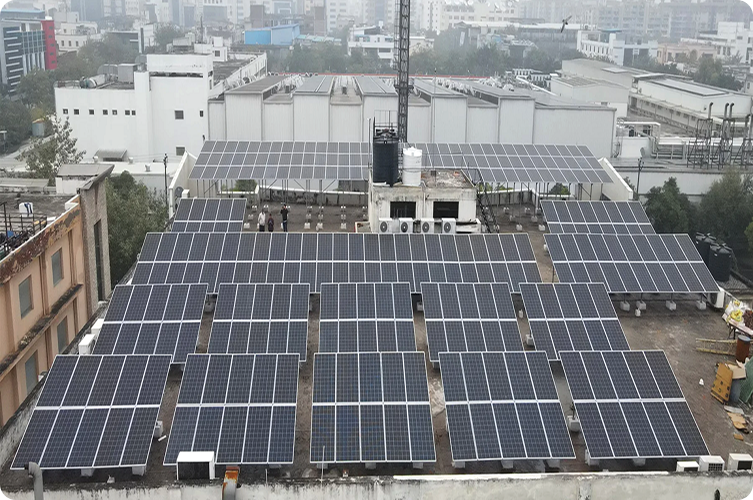
key benefits of solar system for industries

Significant Reduction in Electricity Costs

Industries can save up to 60–80% on their power bills by generating their own electricity.

High ROI and Quick Payback Period 

Industrial solar systems typically offer a payback period of 3–5 years, depending on usage and system size. After the payback period, the electricity generated is essentially free for the next 20+ years, making it a highly profitable investment.

Low Maintenance and Long Lifespan

Solar systems require minimal maintenance and typically last for 20–25 years. This makes solar a reliable and low-risk investment for industries.

These benefits reduce the overall investment cost and improve ROI.

Types of Solar Solutions for Industries

Industries can choose from various solar power solutions based on their energy requirements, available space, and operational needs. Selecting the right type of solar system is important to maximize efficiency and return on investment. Choosing the right solar solution depends on your energy consumption, available space, and long-term business goals.

Solar Rooftop Systems for Industries

Solar Rooftop Systems for Industries

Solar rooftop systems are the most commonly used solution for industrial applications. These systems are installed on the rooftops of factory buildings, warehouses, and commercial facilities. Industries with large roof areas can generate a significant amount of electricity using this method.

Suitable for:

Manufacturing units, Warehouses, Textile industries, and Industrial buildings

Benefits:

Utilizes unused roof space, Lower installation cost compared to ground systems and Quick installation

Ground-Mounted Solar Power Plants
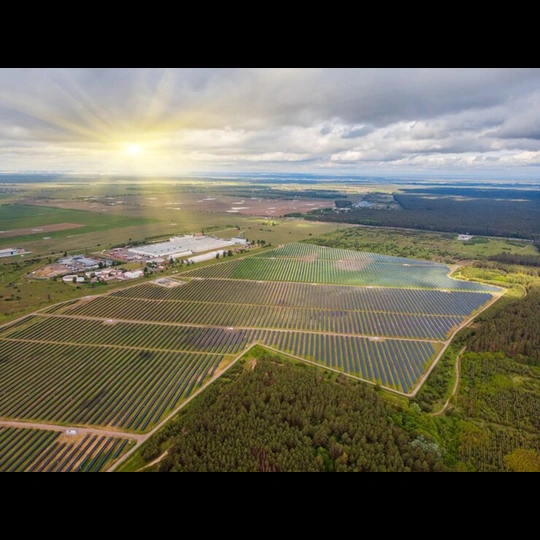
Solar ground mount power plant installed for the large scale industries

Ground-mounted systems are installed on open land within or near industrial premises. These systems are ideal for industries with high energy consumption and available land. They can be designed for large-scale power generation.

Suitable for:

Large-scale industries, Factories with unused land, Industrial parks

Benefits:

Higher capacity installation, Better performance optimization, Scalable system design

Which Industries Can Benefit from Solar Power?

Solar energy is suitable for a wide range of industries, especially those with high electricity consumption and available space for installation. Industries that operate for long hours or rely heavily on machinery can significantly reduce their operational costs by adopting solar power.

Here are some of the key industries that can benefit the most from solar solutions:


Manufacturing Industries

Manufacturing units are among the highest energy consumers. Machinery, production lines, and continuous operations lead to heavy electricity usage.

Textile Industries

Textile units operate multiple machines, such as spinning, weaving, and dyeing, which consume a large amount of electricity.

Warehouses & Logistics Centers

Warehouses typically have large unused rooftop space, making them ideal for solar installations.

Food Processing Industries

Food processing units require energy for heating, cooling, and machinery operations.

Hospitals & Healthcare Facilities

Hospitals run 24/7 and need an uninterrupted power supply for critical operations.

Cold Storage & Refrigeration Units

Cold storage units require continuous power to maintain temperature.

Commercial Complexes & Malls

Large commercial buildings consume significant electricity for lighting, HVAC, and operations.

Cost, ROI & Payback Period of Industrial Solar

One of the most important factors industries consider before switching to solar is the investment required and the returns they can expect. Industrial solar systems are not just an energy solution but they are a long-term financial investment.

Cost of Industrial Solar Rooftop Systems

The cost of installing a solar power plant for industries depends on several factors such as system size, technology, and installation type (rooftop or ground-mounted).

On average:

₹35,000 to ₹50,000 per kW (approximate range)

While the initial investment may seem high, the long-term savings significantly outweigh the cost.

Return on Investment (ROI):

Installing a solar rooftop system in a manufacturing industry typically reduces electricity bills by 50% to 80%

Rapid Payback: 

Industries often see full ROI in 3 to 6 years, with systems continuing to produce electricity for 20–25+ years.

Example: Industrial Solar Savings

Let’s consider a simple example:

Monthly electricity bill: ₹5,00,000

Solar installation reduces 70% cost

Monthly savings: ₹3,50,000
Yearly savings: ₹42,00,000

This clearly shows how industries can quickly recoup their investment and generate long-term profits.

How to Choose the Right Solar EPC Company 

Installing a solar power system is a long-term investment for industries. The performance, efficiency, and overall return on investment depend not only on the equipment but also on the expertise of the solar EPC (Engineering, Procurement, and Construction) company you choose. Selecting the right partner ensures that your solar system is designed, installed, and maintained properly for maximum performance and long-term reliability.

1. Experience & Industry Expertise

An experienced EPC company understands the unique energy requirements of different industries and can design systems accordingly.

What to check:

Years of experience

Number of industrial projects

Industry-specific expertise

2. Quality of Components

The quality of solar panels, inverters, and mounting structures plays a crucial role in system performance.

What to check:

Tier-1 solar panels

Reliable inverter brands

Warranty coverage

3. Customized System Design

Every industry has different energy consumption patterns. A good EPC company provides tailored solutions instead of a one-size-fits-all approach.

What to check:

Site analysis

Load assessment

Custom system design

4. Installation & Execution Capability

Proper installation ensures safety and efficiency.

What to check:

Skilled installation team

Safety standards

Timely project completion

5. Operations & Maintenance

Solar systems require periodic maintenance to perform efficiently over time.

What to check:

AMC (Annual Maintenance Contracts)

Service response time

Monitoring support

6. Transparency in Cost & ROI

A reliable EPC company provides clear information about:

Project cost

Expected savings

Payback period

Avoid companies that give unrealistic promises.

7. End-to-End Service

The best EPC companies handle everything:

Consultation

Design

Installation

Approvals

Maintenance

This ensures a hassle-free experience for industries.

Choosing the right solar EPC partner is as important as choosing the right solar system. A well-designed and properly installed system can deliver consistent savings and performance for decades. At KCP Eco Energy, we specialize in delivering customized solar solutions for industries with a focus on performance, quality, and long-term savings.

    FAQ – Solar for Industries

    How much can industries save with solar power?

    Industries can typically reduce their electricity costs by 60–80%, depending on system size and energy consumption. High energy-consuming industries see faster savings and better returns

    What is the payback period of industrial solar rooftop systems?

    The payback period usually ranges between 3 to 5 years. After this period, industries can enjoy almost free electricity for the remaining lifespan of the system.

    Is solar power suitable for all industries?

    Solar power is suitable for most industries, especially those with high electricity usage and available rooftop or land space. Manufacturing units, warehouses, textile industries, and commercial facilities benefit the most.

    What is the cost of installing a solar rooftop power plant for industries?

    The cost typically ranges from ₹35,000 to ₹50,000 per kW, depending on system size and type. Larger systems offer better cost efficiency and ROI.

    Do industries get government subsidies for solar?

    Unlike residential systems, industries usually do not receive direct subsidies. However, they benefit from tax advantages, accelerated depreciation, and net metering, which improve overall returns.

    Everything you need to know about solar for Industries
    Scroll to top